What High-Performing Organizations Get Right
When organizations think about innovation, they tend to focus on what customers can see. A better digital experience. Faster response times. New products and services. More personalized interactions. These investments matter. But some of the most impactful improvements happen far away from the customer interface. They happen inside operations.
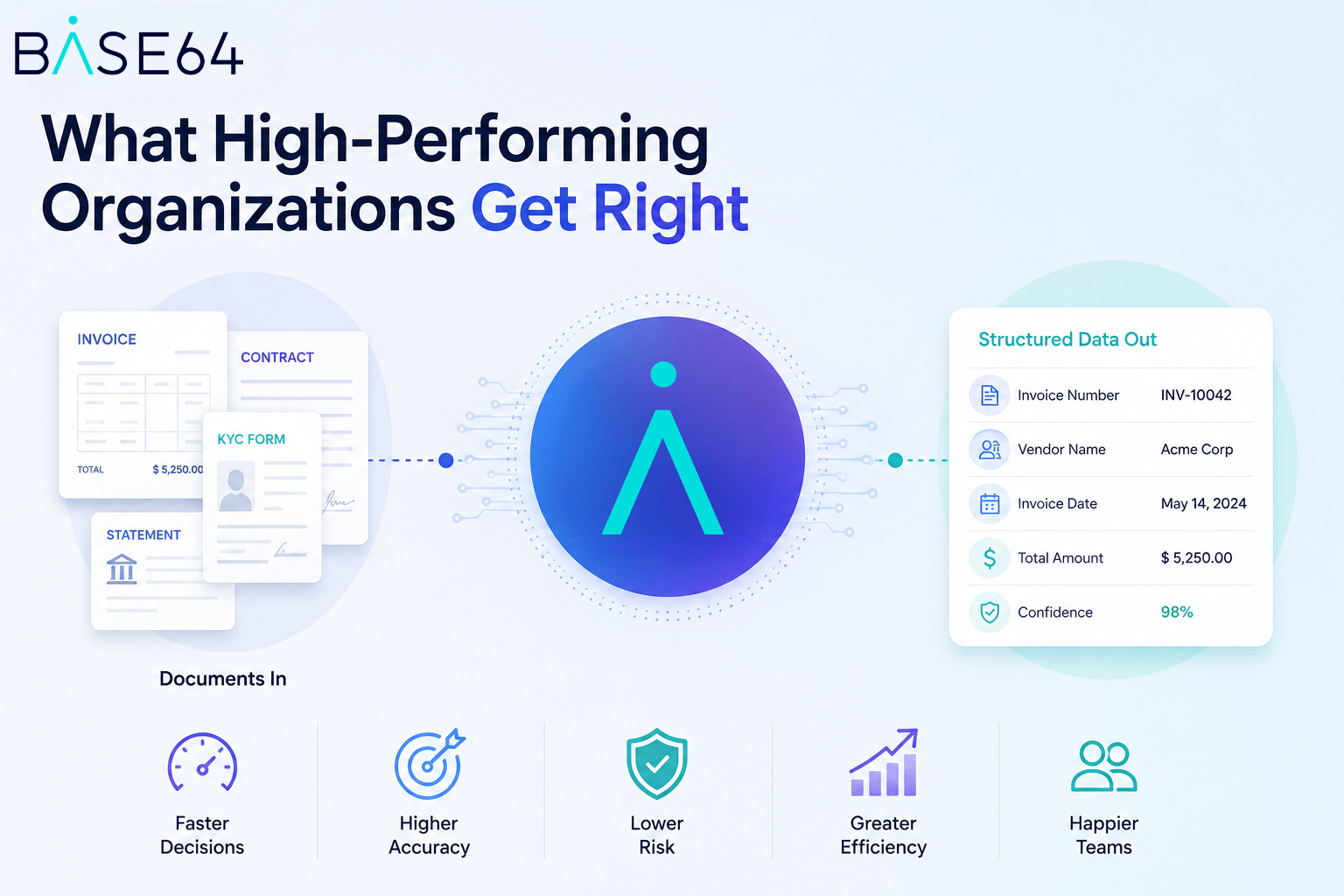
Behind every customer interaction is a network of processes responsible for moving information, validating data, managing risk, and ensuring compliance. Most of this work is invisible to customers when it functions well. Yet when it breaks down, the effects are felt immediately. Applications take longer to process. Claims are delayed. Customers wait for approvals. Employees spend valuable time on repetitive tasks instead of higher-value work. The challenge isn’t that organizations lack information. In fact, many have more information than ever before. The challenge is that critical business data is often trapped inside documents, forms, emails, and disconnected systems.
Operations Are Becoming a Competitive Differentiator
Historically, operational excellence was viewed as a cost-saving initiative. Today, it’s becoming a growth strategy. Organizations that can move information efficiently through their business can respond faster to customers, launch services more quickly, and adapt more effectively to changing market conditions. This shift is changing how leaders think about technology investments. Instead of asking, “How can we reduce costs?” they’re increasingly asking, “How can we remove friction?” Because friction slows everything. It slows down decisions. It slows customer experiences. And ultimately, it slows growth.
The Rise of Operational Intelligence
Over the last decade, businesses have invested heavily in systems that collect information. The next challenge is making that information usable. Modern AI is helping organizations bridge that gap by transforming unstructured information into data that can support workflows, decisions, and automation. The goal isn’t simply to digitize processes. It’s to create operational intelligence, the ability to understand what’s happening across the business and act on it quickly.
When information becomes accessible and actionable, organizations spend less time searching for answers and more time executing.
Looking Ahead
As AI adoption continues to accelerate, the biggest opportunities may not come from creating entirely new ways of working. They may come from improving the processes that already exist. The organizations that gain the greatest advantage will be those that identify operational friction, unlock the information hidden within their workflows, and enable their teams to move faster with greater confidence.
Because in the end, business performance is often determined by something surprisingly simple: How efficiently information moves through an organization.
As businesses look to do more with less, Base64.ai helps bridge the gap between unstructured information and operational intelligence.