Turning Document Intelligence Into Business Action
In our previous article, we explored why technologies like Agentic AI, Retrieval-Augmented Generation (RAG), and Model Context Protocol (MCP) all depend on one critical foundation: trusted, structured data. Without it, even the most advanced AI can’t deliver meaningful business value. But once your documents become structured data, another question emerges:
What happens next?
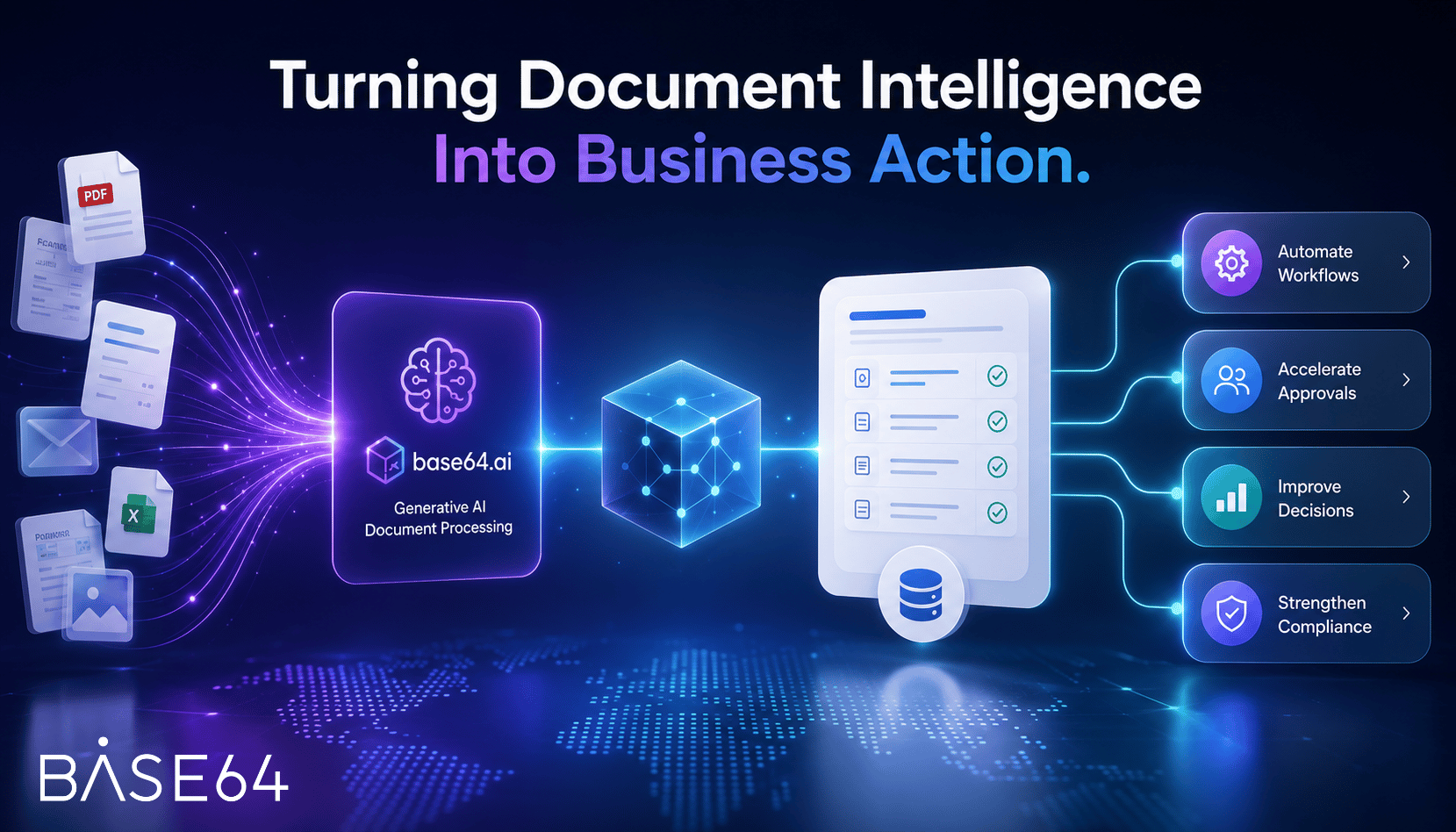
AI Doesn’t Create Value Until It Takes Action
Many organizations think their AI journey ends once information has been extracted from documents. In reality, that’s where the biggest opportunity begins. Extracting data is important, but it’s only one step in a much larger business process. A loan application still needs to be reviewed. A bankruptcy filing still needs to be routed. A compliance document still needs to be validated. A customer still expects an answer.
If employees must manually move extracted data between systems, trigger workflows, or initiate approvals, organizations are still introducing unnecessary delays into their operations. The real advantage comes when documents, data, decisions, and workflows become one connected process.
From Document AI to Business AI
Modern AI isn’t simply replacing manual data entry. It’s beginning to replace entire document-driven business processes. Instead of automating individual tasks, organizations are connecting document understanding with business logic, validation, approvals, and downstream systems to create end-to-end automation. This shift moves AI from isolated task automation to intelligent, decision-driven workflows.
That means AI can:
- Receive incoming documents.
- Identify document types automatically.
- Extract and validate key information.
- Compare data across multiple documents.
- Trigger business rules.
- Route exceptions for review.
- Deliver clean data directly into enterprise applications.
The result isn’t simply faster document processing. It’s faster business execution.
The Competitive Advantage Is Workflow Speed
Many organizations are investing heavily in AI models. The organizations pulling ahead are investing in something else: Removing friction.
When information flows automatically from documents into the systems where work happens, customers wait less, employees spend less time on repetitive tasks, and operations become significantly more scalable. Instead of asking: “How can AI help process this document?”. Leading organizations are asking: “How can AI eliminate this entire workflow?”
AI Needs More Than Data. It Needs a Destination.
Document intelligence gives AI the information it needs. Workflow automation gives that information a purpose. Together, they create an environment where decisions happen faster, operations scale more efficiently, and AI delivers measurable business outcomes. Because the future of enterprise AI isn’t just about understanding documents. It’s about turning every document into action. Whether you’re implementing Agentic AI, RAG, or modern workflow automation, Base64 provides the document intelligence layer that turns information into action.