The Rise of Autonomous Operations Starts With Documents
Enterprise AI is entering a new phase. For the past few years, organizations have focused on making work faster. Automating repetitive tasks. Deploying chatbots. Using generative AI to summarize reports or answer questions. These initiatives have delivered value, but they’re only the beginning. The next evolution isn’t about helping employees work faster. It’s about enabling systems to work on their own. Imagine a loan application that arrives, verifies the applicant’s identity, extracts financial information, validates supporting documents, checks compliance requirements, routes exceptions for review, and reaches a decision, all without manual intervention. Or an insurance claim that receives supporting documents, identifies missing information, detects inconsistencies, updates internal systems, and notifies the customer automatically. This isn’t a future concept. Organizations are already building toward it. But there’s one challenge every autonomous workflow shares.
It needs trusted data.
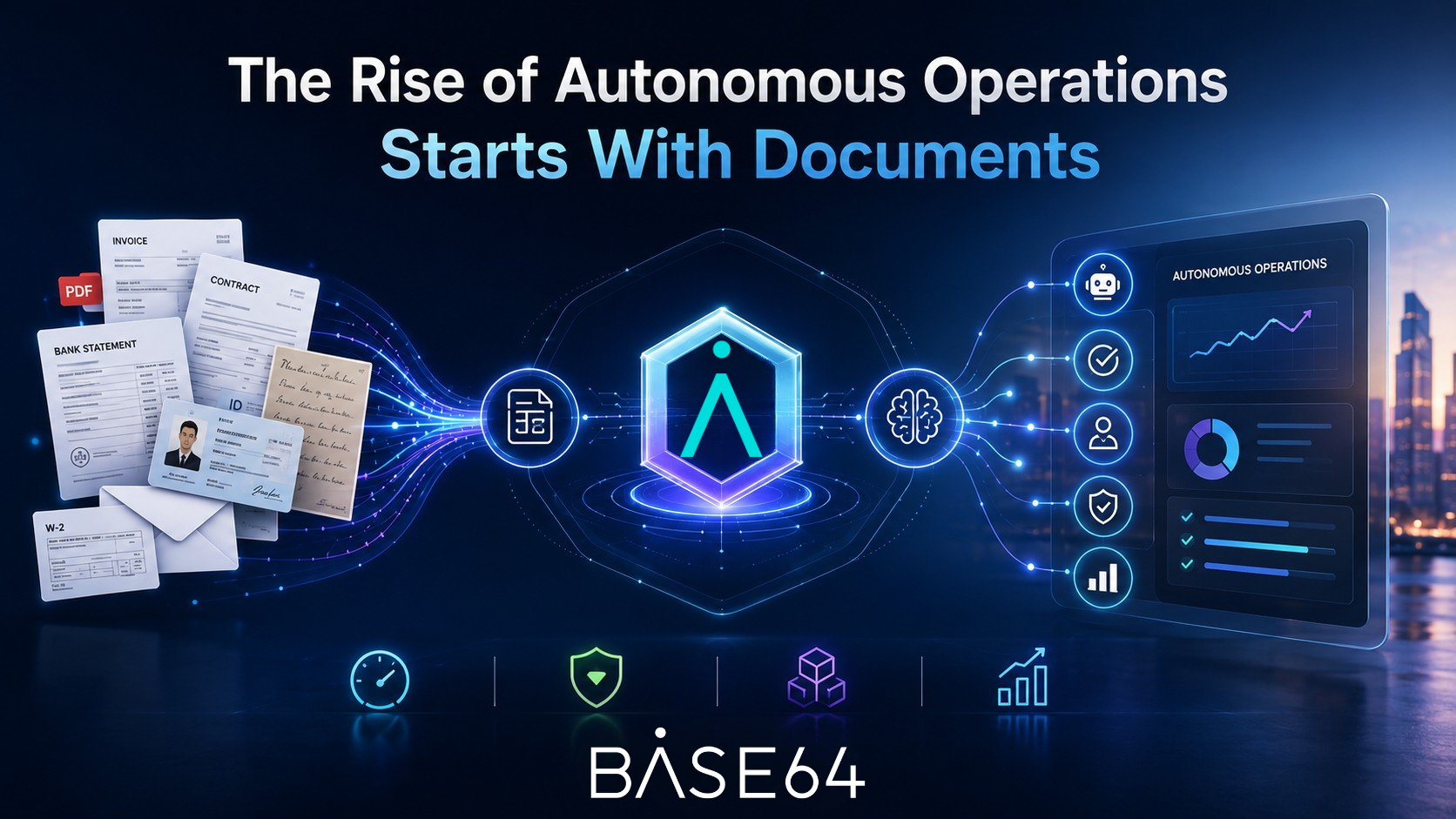
Most business processes still begin with documents. Contracts, invoices, financial statements, tax forms, medical records, purchase orders, shipping documents, customer applications, the information that powers the business is still arriving in formats designed for people, not machines. No matter how advanced AI becomes, it cannot make reliable decisions if the information entering the process is incomplete, inconsistent, or trapped inside unstructured documents. That’s why intelligent document processing is becoming one of the most strategic layers of the modern enterprise.
Instead of treating documents as static files, forward-thinking organizations are treating them as live data sources. Every incoming document is automatically classified, every relevant field is extracted, and every piece of information becomes immediately available to downstream systems, AI models, and business workflows. The impact extends far beyond operational efficiency.
When every document becomes structured data, organizations can build automation once and reuse it across departments. Finance, compliance, customer onboarding, lending, insurance, procurement, and HR all begin operating from the same trusted source of information. AI agents no longer spend time searching through documents, they receive exactly the data they need to take action. This shift changes the role of employees as well.
Instead of spending hours collecting information, validating forms, or moving data between systems, teams can focus on reviewing exceptions, making strategic decisions, and delivering better customer experiences.
At Base64.ai, we believe this is where enterprise AI is headed. Our platform extracts structured data from virtually any document, regardless of format, layout, or language, creating the reliable data foundation that autonomous operations depend on. The organizations that will lead the next decade won’t simply have the most AI tools. They’ll have systems that can understand documents, move information instantly, and turn data into action, without waiting for someone to type it in.