How AI Is Reshaping Banking Compliance Teams
Compliance teams are being asked to do more than ever before. Customer onboarding volumes are increasing, regulatory scrutiny continues to grow, and operational teams are expected to move faster without compromising accuracy or security. The challenge is that many compliance workflows still depend on highly manual processes. Teams spend countless hours reviewing IDs, validating supporting documents, cross-checking information, and correcting extraction errors from outdated OCR systems. As document volumes scale, these workflows become harder to maintain efficiently.
AI is beginning to fundamentally change how these operations are managed.
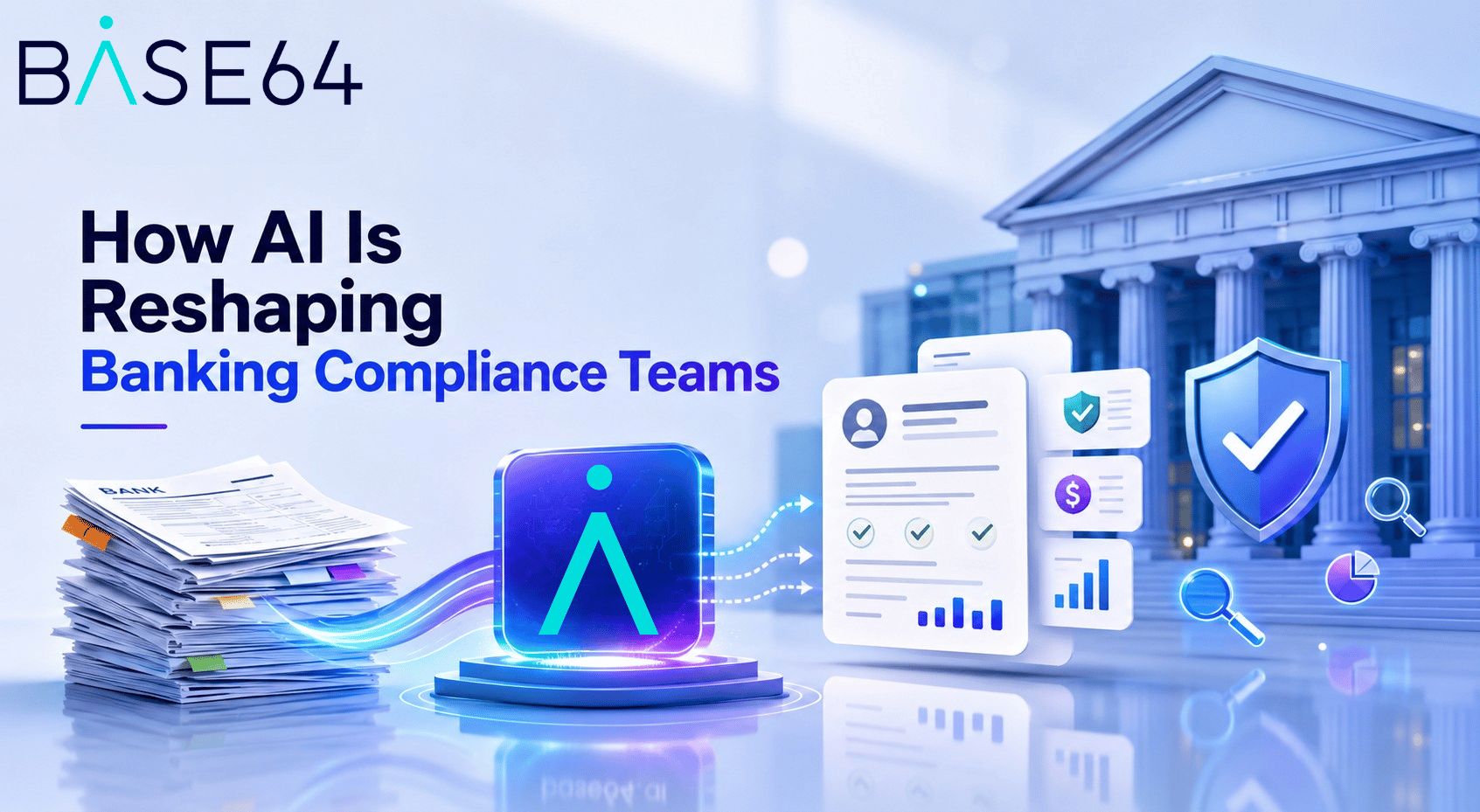
Rather than treating documents as static files that simply need text pulled from them, modern AI systems are able to understand the structure and context of information within a document. This creates a major shift in how compliance workflows operate.
For example, instead of manually reviewing a passport, proof of address, or bank statement line by line, AI can identify the document type automatically, locate the relevant fields, extract the required information, and validate whether the document meets predefined business or compliance rules. This dramatically reduces the amount of repetitive operational work compliance teams deal with on a daily basis.
The impact goes beyond efficiency. AI-powered workflows also improve consistency across reviews. Manual processing naturally introduces variation, especially when teams are reviewing thousands of documents under tight timelines. Intelligent automation helps standardize extraction and validation processes while reducing common human errors that can slow onboarding or create downstream compliance risks.
Another major advantage is flexibility. Traditional OCR systems often require templates or predefined document structures, making them difficult to maintain when formats change. Modern AI-driven platforms are far better equipped to handle document variations, multilingual content, and previously unseen document types without requiring constant retraining or manual configuration.
Fraud detection is also becoming a larger part of AI-powered compliance workflows. Advanced systems can now identify indicators of manipulation, suspicious edits, inconsistent metadata, or formatting anomalies that may not be immediately visible during manual review alone.
Importantly, AI is not replacing compliance professionals. Instead, it is allowing teams to focus on higher-value analysis and exception handling while automation manages repetitive document processing tasks in the background.
As financial institutions continue modernizing operations, compliance is quickly becoming one of the most impactful areas for AI adoption. The organizations investing in intelligent document automation today are positioning themselves to onboard customers faster, reduce operational strain, and scale more effectively as compliance demands continue evolving.
At Base64, we help banks turn compliance document processing from a manual bottleneck into a scalable AI-powered advantage, so teams can move faster, reduce risk, and stay ready for whatever regulatory demands come next.