AI Isn’t Automating Tasks – It’s Replacing Business Processes
Most conversations about AI still sound like this:
“What tasks can we automate?”
It made sense a few years ago.
Automate data entry.
Automate classification.
Automate extraction.
But that framing is starting to break.
Because the most interesting shift in AI right now isn’t about tasks.
It’s about entire business processes disappearing.
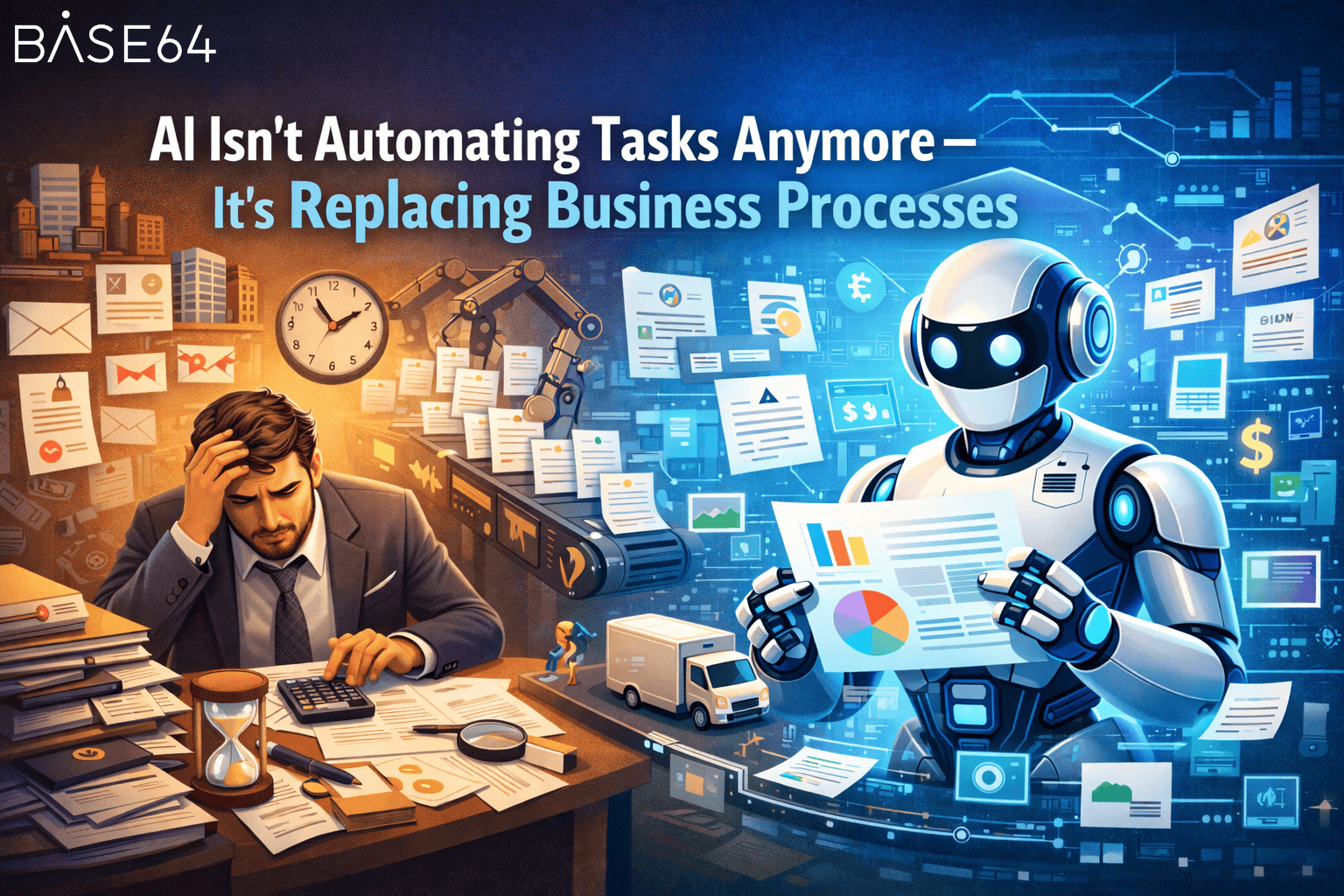
From Steps → Systems
Think about a typical document-driven business process:
- Receive document
- Extract data
- Validate fields
- Cross-check with other systems
- Flag exceptions
- Route for review
Traditionally, we’ve optimized each step.
Better OCR.
Better rules.
More automation.
But now?
AI systems are starting to handlethe process end-to-end in one system.
Not as a series of steps.
As a decision-making system.
The Rise of AI-Native Workflows
Modern AI systems don’t just move data forward.
They:
- Interpret context
- Resolve inconsistencies
- Decide what matters
- Take action
In other words:
- They behave less like tools
- And more like operators
This is exactly where we’re seeing the biggest shift in document AI – moving beyond extraction into end-to-end understanding and decisioning.
Why This Changes Everything
When AI handles workflows end-to-end:
- You don’t need as many handoffs
- You don’t need rigid rules for every edge case
- You don’t need humans reviewing every step
Instead of:
Human → tool → human → tool → human
You get:
AI system → human (only when needed)
That’s a completely different operating model.
Where This Breaks Down (For Most Teams)
Here’s the catch:
Most companies aren’t set up for this shift.
They:
- Bolt AI onto existing processes
- Keep legacy workflows intact
- Add “AI steps” instead of redesigning the system
The result?
- More complexity, not less
- Faster steps, but same bottlenecks
We see this often in document workflows – teams invest in extraction, but still rely heavily on manual validation and fragmented systems downstream.
What High-Performing Teams Are Doing Differently
The teams getting real value from AI are doing something counterintuitive:
They’re not asking:
“Where can we add AI?”
They’re asking:
“If AI handled this from scratch, what would the workflow look like?”
That leads to:
- Fewer steps
- Fewer tools
- Fewer decision points
And much higher leverage.
The Role of Document AI in This Shift
Documents are where most workflows begin.
They trigger:
- Onboarding
- Claims
- Payments
- Compliance checks
If your system only extracts data… you’re still solving one part of a much larger business process.
But if your system can:
- Understand documents
- Validate information across sources
- Flag inconsistencies in real time
Then the document becomes:
- Not just an input
- But the starting point of an automated workflow
This is the direction document AI is moving toward – and where we’re continuing to focus at Base64.ai.
The Bottom Line
AI isn’t just making tasks faster.
It’s removing the need for many of them entirely.
And the companies that win won’t be the ones with the most automation…
They’ll be the ones who rethink how business processes are designed in the first place.
If you’re exploring what this shift looks like in practice, especially in document-heavy workflows, it’s worth taking a closer look at how your current systems are structured – and where they’re creating unnecessary friction.